
Choose a starter, verify the opening move’s physical or special category, and pair it with a compatible route. The planner preserves existing p and m share links and never reads your account.
Starting move & build planner
Model the default opening, the first 400-coin selector, Repertoire, and the separate 400-coin second selector. Optional taught TMs are a local assumption; this tool never reads or changes an account.
Four routes to start with
| Starting move | Example partner | Required stat | How to use the route |
|---|---|---|---|
| Ember | Charmander | Power (atk) | Improve the projectile and take its attack stat prerequisite; watch Fire-resistant enemies. |
| Bubble | Piplup | Sprint (spd) | Use the movement upgrade as both a prerequisite and a positioning aid. |
| Razor Leaf | Treecko | Reflexes (cd) | Work toward the cooldown prerequisite while improving the starting attack. |
| Confusion | Psyduck | Reflexes (cd) | Use a Psychic opening, then keep a damaging alternative for poor matchups. |
No matches. Try another name or reset the filters.
Compare three opening partners
The video could not load. Read the transcript below or open the recording.
Read the video steps
- You can choose a different partner after the personality result.
- Bulbasaur opens with Vine Whip. Read the move before confirming.
- Squirtle opens with Water Gun. Its evolution needs Power.
- Charmander opens with Ember. Plan Power and move level five.
- Confirm your choice, then use the build guide for its exact route.
Match the move to the correct offensive stat
Physical moves scale from Attack and special moves from Special Attack. Swords Dance and Dragon Dance boost only physical Attack; Nasty Plot is a shared Normal-pool buff that boosts Special Attack and can be selected for a special route such as Charmander with Ember.
A move evolution can still require the Power card recorded by the current source even when the move is special. That eligibility card and the damage-scaling stat are separate rules; this guide does not invent a replacement evolution requirement.
A repeatable upgrade order
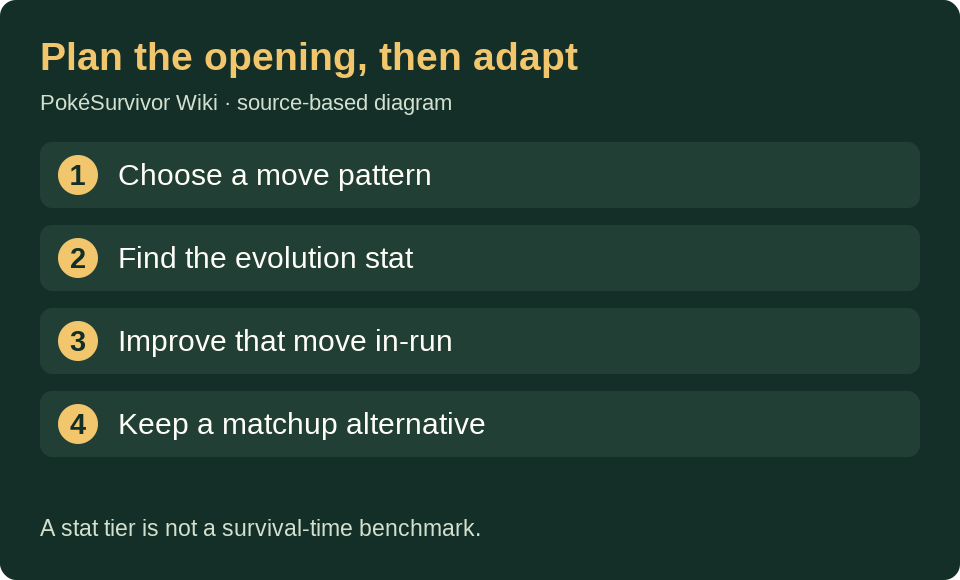
- Check your starter’s actual starting move in the starter table. Two partners of the same type can start with different moves.
- When offered, take the stat card required by that move’s evolution. The condition is taking it in the current run, not buying an unrelated permanent improvement.
- Raise the move to its maximum level. Choose the golden evolution card when it is offered.
- Add another damaging move from your partner’s type pool or the shared Normal pool. Select it when the matchup or attack pattern makes it more useful.
Tradeoffs that change your decisions
An attack’s raw damage does not account for missed shots, travel, area coverage or enemy resistance. Do not compare a persistent aura and a projectile as if damage divided by cooldown measured identical things.
Melee moves require closer positioning. The snapshot includes a melee balance change in the move definitions, so older tables may disagree with this reference. Inspect both the current move and the risk of staying in range.
Stat upgrades, terrain and weather can change a run. Treat the routes above as starting plans and use the type calculator when your damage seems unexpectedly low.
From partner choice to a saved route
- Choose a partner you already own or compare the 29 free starters.
- Check which moves are legal for that partner and whether they scale from Attack or Special Attack.
- Confirm the exact evolution card before spending level choices.
- Build and share the route, then press Save in the official game and wait for the cloud-success state before changing devices.
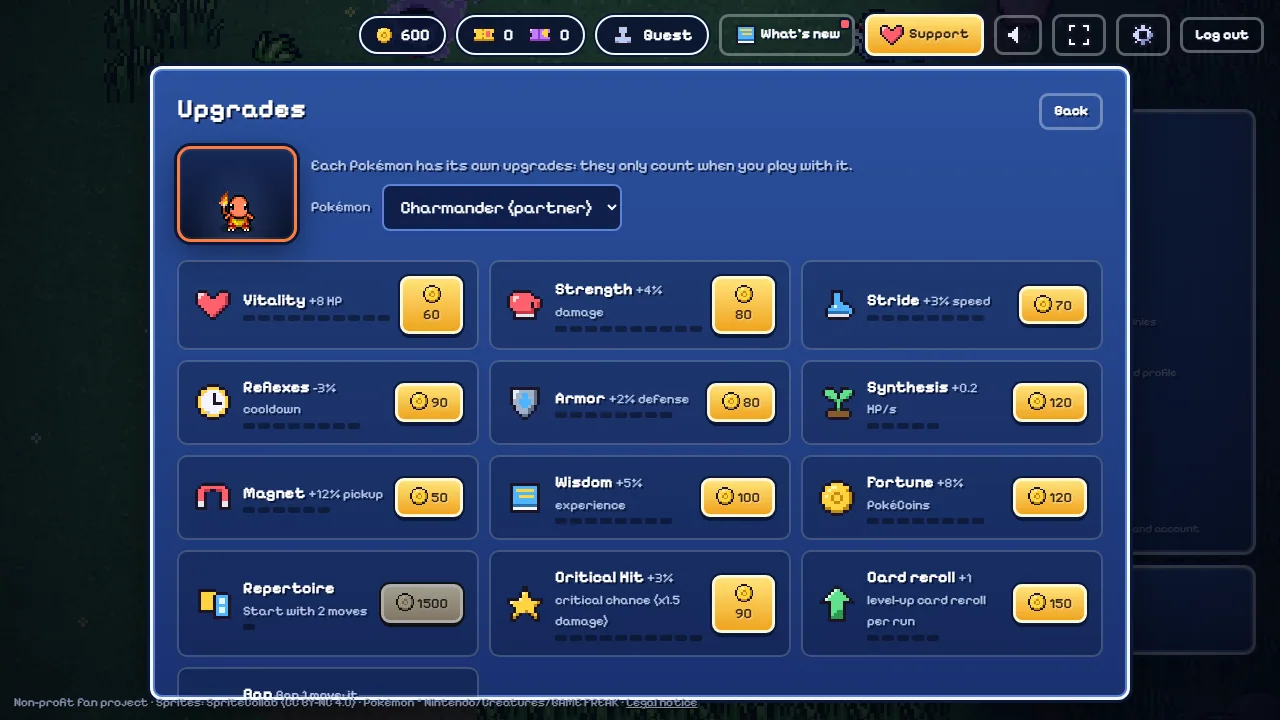
Two selectors, Repertoire and taught TMs
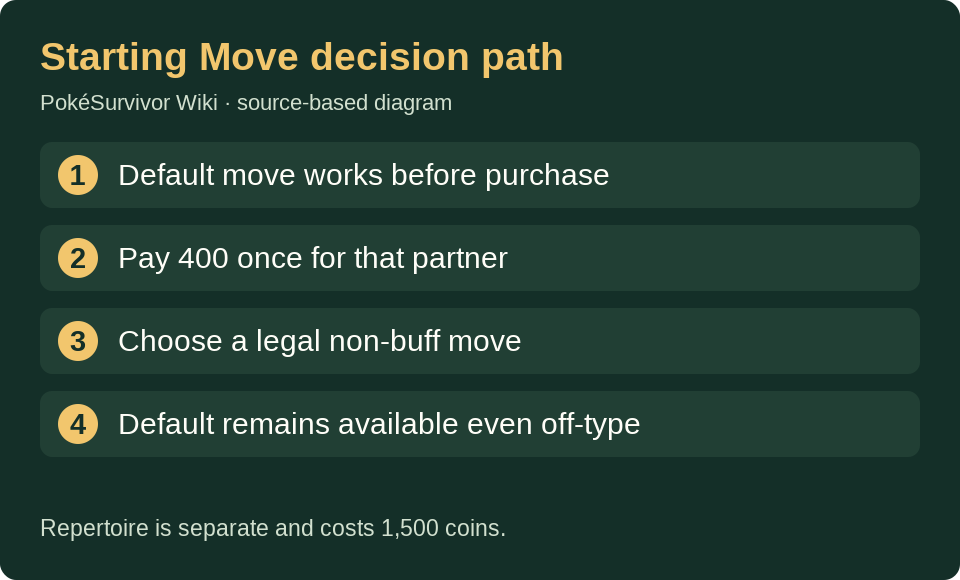
- First selector: 400 coins per partner; choose the first legal non-buff opening.
- Repertoire: 1,500 coins per partner; starts with two moves, with the second random until its selector is unlocked.
- Second selector: another 400 coins and requires Repertoire. A partner starting from neither unlock needs 1,900 coins to choose only the second move, or 2,300 coins to choose both.
- Taught TM: a compatible TM becomes part of the legal pool only after it has been taught in the game. The planner’s checkbox is a local assumption.
- Validation: the second move cannot duplicate the first; buffs remain excluded. The partner’s special default exception remains available.
Old shared links using p and m still open. V8 links add versioned fields only when new choices are modelled.
Skill-set selection report #317
Player report #317 describes the selected skill set changing after adding a new set or returning from a rift. This is not the same as the earlier rule that learning a new move no longer switches the active move. Preserve the current build, record the selected set before and after the transition, and treat the cause as unconfirmed.
A practical 0–7 minute route
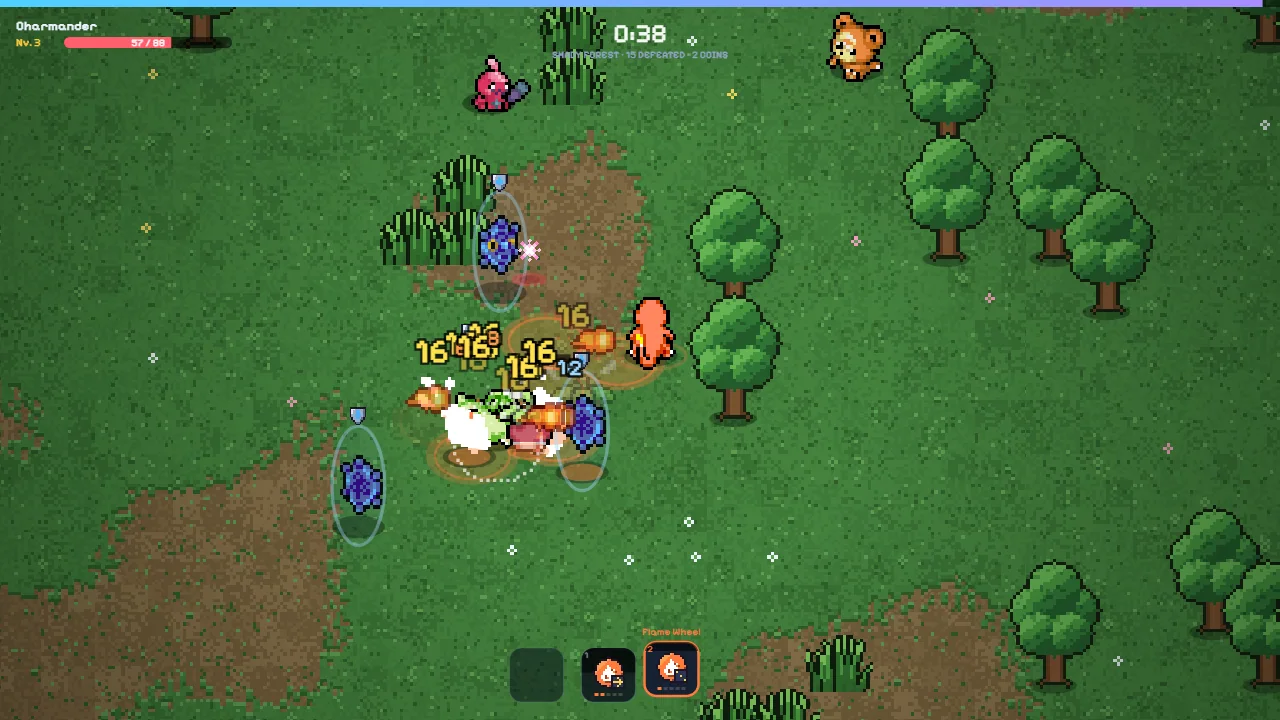
- 0:00–2:00: keep moving in wide loops, collect nearby experience and learn the opening attack pattern before chasing distant drops.
- 2:00–4:00: take one coherent damage route—physical or special—and the exact stat card required for the planned move evolution.
- 4:00–6:00: protect an escape lane; do not spend every choice on damage if the build cannot reposition or survive contact.
- 6:00–7:00: stop crossing the arena for low-value drops. Finish the first move plan, preserve space and judge the run by whether the route is stable, not by a single lucky offer.
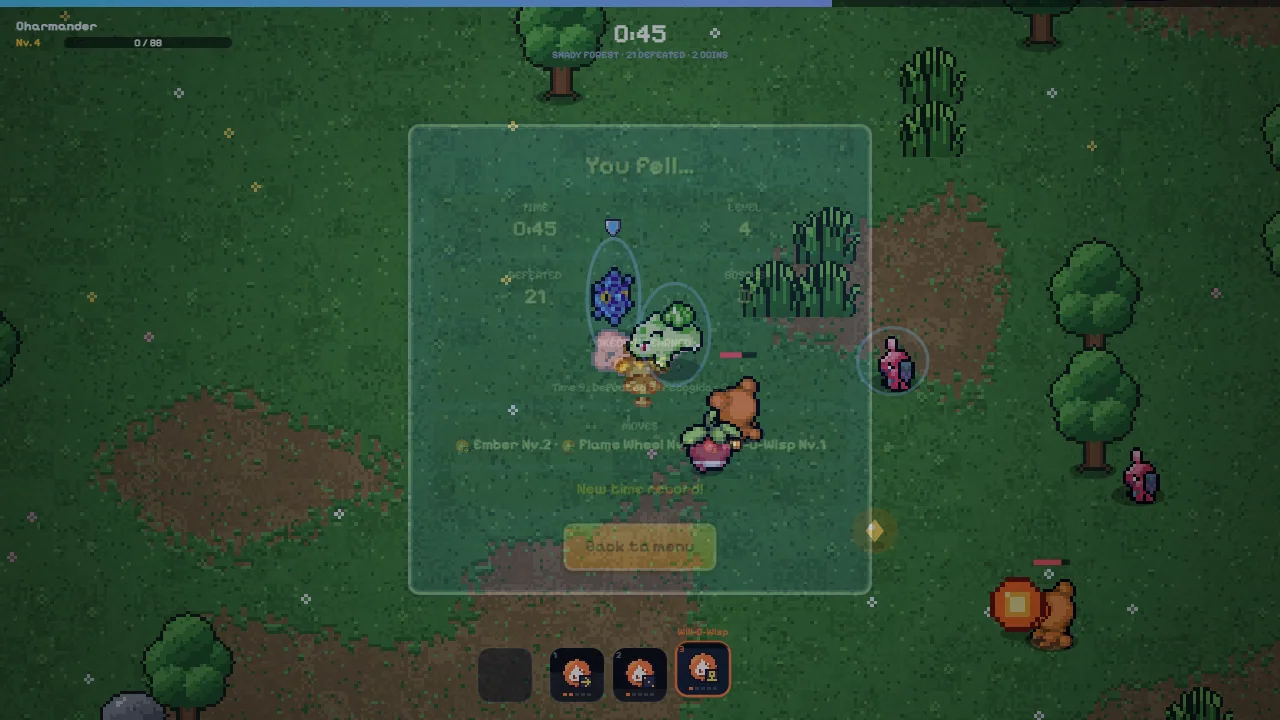
This is a reproducible beginner route, not a guaranteed clear. Upgrade offers, partner access and execution differ between runs.



Sources & snapshot scope
Reference reviewed 2026-10-30. Mechanics and data were checked against the named source snapshot. Source inspection is separate from gameplay testing. d567c6d.